
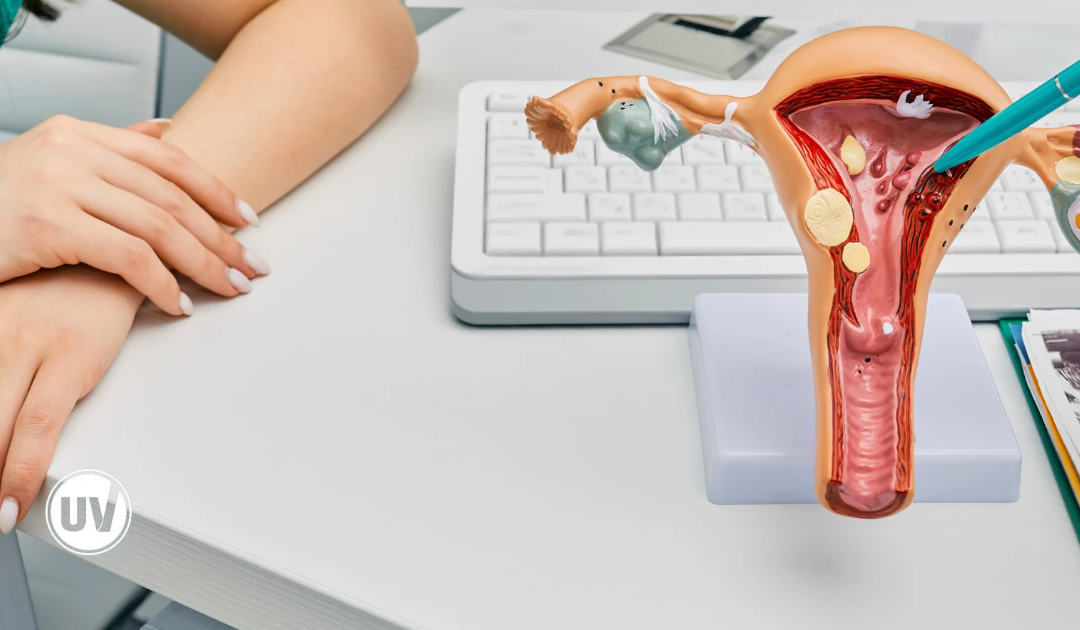
Cervical polyps and uterine fibroids are both growths that can affect reproductive health, but they develop in different places and from different types of tissue. Cervical polyps grow on the cervix, while fibroids develop from the muscle of the uterus. Their symptoms can overlap, especially when abnormal bleeding is involved, but the right diagnosis can make a big difference in understanding your treatment options.
If you are wondering about the difference between cervical polyps vs. fibroids after experiencing bleeding, pelvic pressure, or an imaging finding, here is what to know.
What Is the Difference Between Cervical Polyps and Fibroids?
The biggest difference is where they develop and what they are made of.
Cervical polyps are usually small growths that develop on the cervix, the lower part of the uterus that connects to the vagina. They are often found during a pelvic or speculum examination and may cause spotting, bleeding after sex, or unusual discharge. Some cervical polyps cause no symptoms.
Uterine fibroids, also called leiomyomas or myomas, are noncancerous growths that develop from muscle tissue in the uterus. They can grow within the uterine wall, toward the uterine cavity, or outward from the uterus. Their symptoms often depend on their size and location.
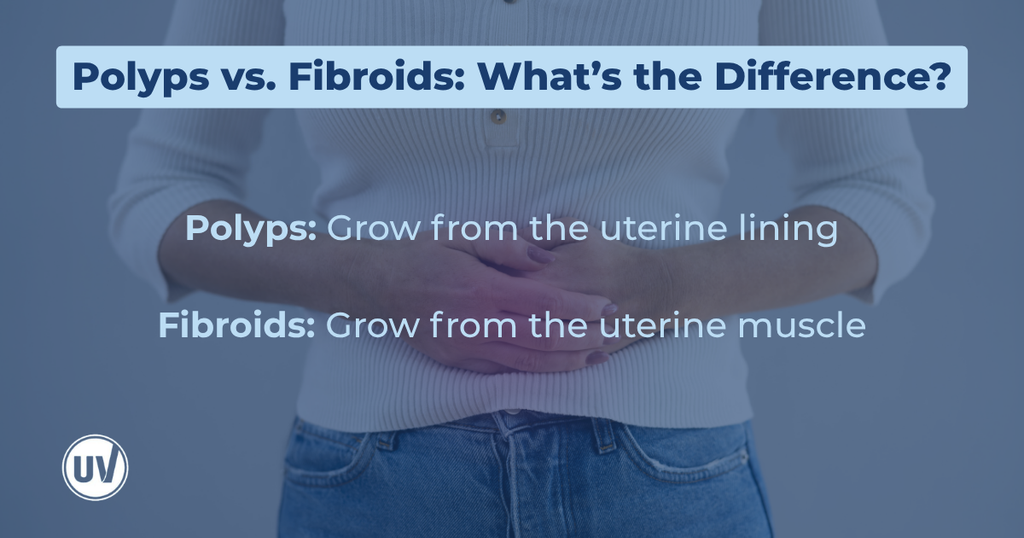
It is also important to distinguish both from endometrial polyps, which develop from the lining of the uterus and can cause irregular or unpredictable bleeding.
Cervical Polyps vs. Fibroids: Symptoms
Cervical polyps and fibroids can both cause abnormal bleeding, but other symptoms may help point toward one condition or the other.
Cervical polyp symptoms may include:
- Spotting between periods
- Bleeding after sex
- Postmenopausal bleeding
- Unusual vaginal discharge
- Mild cramping
Uterine fibroid symptoms may include:
- Heavy or prolonged periods
- Passing blood clots
- Fatigue related to anemia
- Pelvic pressure or fullness
- Back discomfort
- Frequent urination or bowel symptoms
- Pelvic pain
Fibroids are more likely than cervical polyps to cause pressure or symptoms involving nearby organs, particularly when they become larger. However, symptoms alone cannot confirm the cause of abnormal bleeding or pelvic discomfort.
Why Does Location Matter?
The location of a growth can influence its symptoms and how it is treated.
A cervical polyp develops on or within the cervix, where it can become irritated by intercourse or a pelvic examination and cause bleeding.
Fibroids can develop in several areas of the uterus:
- Intramural fibroids: Grow within the muscular wall of the uterus
- Submucosal fibroids: Grow toward or into the uterine cavity and may contribute to heavy bleeding
- Subserosal fibroids: Grow outward from the uterus and may cause pressure as they enlarge
Because of these differences, two people with the same number or size of fibroids can have very different symptoms.
How Are Cervical Polyps and Fibroids Diagnosed?
Diagnosis typically starts with a discussion of symptoms and a pelvic examination. A cervical polyp may be visible during a speculum exam, while uterine fibroids are commonly evaluated with imaging.
Depending on the symptoms and suspected diagnosis, testing may include:
- Pelvic examination to look for visible cervical polyps or other abnormalities.
- Transvaginal ultrasound to evaluate the uterus and identify fibroids or other causes of abnormal bleeding.
- Saline infusion sonohysterography to provide a clearer view of the uterine cavity.
- Hysteroscopy to directly examine the uterine cavity and potentially remove certain polyps or fibroids.
- Biopsy or pathology when removed tissue needs to be evaluated.
MRI may also be useful when fibroids are large, numerous, difficult to locate, or being evaluated before a procedure.
How Are Cervical Polyps and Fibroids Treated?
Treatment depends on the type and location of the growth, symptoms, age, reproductive goals, and other individual factors.
Cervical polyps that cause symptoms or have an atypical appearance may be removed, often during an office visit. Removed tissue may be sent for pathology. If bleeding continues after removal, additional evaluation may be needed.
Uterine fibroids may be monitored when they are small and do not cause significant symptoms. When treatment is needed, options can include medication, myomectomy, hysterectomy, radiofrequency ablation, focused ultrasound, or uterine fibroid embolization (UFE). UFE is a minimally invasive procedure that reduces blood flow to fibroids to help shrink them and relieve symptoms.
The best option depends on your symptoms, the location and size of the fibroids, and whether preserving fertility or the uterus is important to you.
When Should You See a Doctor?
Most cervical polyps and uterine fibroids are benign, but abnormal bleeding should still be evaluated, particularly after menopause.
Talk with a healthcare provider about:
- Bleeding after menopause
- Recurring bleeding after sex
- Very heavy periods or bleeding that causes dizziness
- New or worsening pelvic pressure or pain
- Symptoms of anemia, such as significant fatigue or shortness of breath
- Persistent watery, bloody, or foul-smelling discharge
These symptoms do not necessarily indicate cancer, but they can signal the need for additional testing or treatment.
Frequently Asked Questions
No. Cervical polyps are growths that develop on or within the cervix, while fibroids are noncancerous growths that develop from the muscular tissue of the uterus.
They can, depending on their location. Cervical polyps are less likely to significantly affect fertility, while endometrial polyps and fibroids that distort the uterine cavity may have a greater impact on conception or pregnancy.
Both can cause abnormal bleeding, but heavy or prolonged periods are commonly associated with uterine fibroids, particularly fibroids that affect the uterine cavity. Cervical polyps are more often associated with spotting, bleeding after sex, or bleeding after menopause.
Get Answers About Fibroids and Your Treatment Options
Understanding whether your symptoms are related to a cervical polyp, fibroid, or another condition is the first step toward finding the right care. If you have been diagnosed with fibroids or are experiencing heavy bleeding, pelvic pressure, or other symptoms, United Fibroid & Vascular Centers can help you understand your options. Our specialists offer minimally invasive treatments for uterine fibroids, including UFE, with care tailored to your individual needs and goals.
Ready to take the next step? Contact United Fibroid & Vascular Centers to schedule a consultation and discuss your fibroid treatment options.