

Searching for the best fibroid specialist near me can feel overwhelming, especially when heavy periods, pelvic pressure, pain, bloating, or fertility concerns are affecting your daily life.
Finding the right specialist is about more than choosing the closest office. You want a provider who understands fibroids, takes your symptoms seriously, explains your treatment options, and considers your personal goals.
Whether you are newly diagnosed or looking for a second opinion, knowing what to look for can help you feel more confident about your next step.
What Should You Look for in a Fibroid Specialist?
A fibroid specialist should regularly evaluate and treat uterine fibroids and be able to discuss multiple treatment approaches.
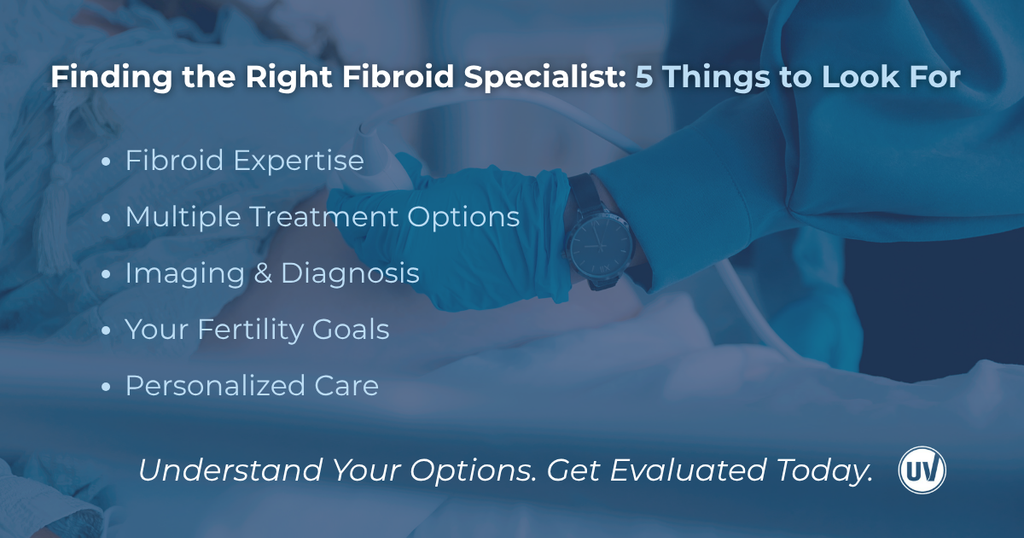
When searching for fibroid treatment near me, consider:
- Experience diagnosing and treating uterine fibroids
- Access to imaging such as ultrasound and MRI when needed
- A willingness to discuss your fertility and pregnancy goals
- Experience with nonsurgical, minimally invasive, and surgical treatments
- Clear explanations of the benefits and limitations of each option
- A care approach that involves you in the treatment decision
- Follow-up support before and after treatment
A good specialist should take the time to understand how fibroids are affecting your life, not just look at their size on an imaging report.
Why Fibroid Size and Location Matter
Finding out that you have fibroids is only the beginning. Your specialist should also explain where the fibroids are located, how large they are, and whether they are likely causing your symptoms.
Fibroids can develop in different areas of the uterus, and their location can influence the symptoms they cause.
For example, a fibroid that grows toward the inside of the uterus may contribute to heavy menstrual bleeding, while a fibroid that grows outward may cause pelvic pressure, bloating, or pressure on the bladder or bowel.
This is why two people with fibroids of a similar size may experience very different symptoms.
Your specialist may use an ultrasound to evaluate your uterus and fibroids. In some cases, an MRI can provide a more detailed picture of the number, size, and location of fibroids and help with treatment planning.
What Fibroid Treatment Options Should You Know About?
There is no single best fibroid treatment for everyone. Your options depend on your symptoms, fibroid size and location, medical history, age, fertility plans, and whether you want to preserve your uterus.
A specialist may discuss options such as:
Monitoring: If your fibroids are not causing significant symptoms, your provider may recommend monitoring them over time rather than treating them right away.
Medication: Certain medications can help manage heavy bleeding, pain, or other symptoms. Medication may be used on its own or as part of a broader treatment plan.
Myomectomy: This procedure removes fibroids while preserving the uterus. It may be an option for people who want to preserve their uterus or are considering future pregnancy.
Uterine fibroid embolization: Also called UFE or UAE, this minimally invasive procedure reduces blood flow to fibroids, causing them to shrink over time.
Hysterectomy: This procedure removes the uterus and provides a permanent treatment for uterine fibroids. Because the uterus is removed, pregnancy is no longer possible after the procedure.
Your specialist should explain how each option may affect your symptoms, recovery, fertility, and long-term care.
Questions to Ask Your Fibroid Specialist
Going into your appointment with a few questions prepared can help you get the information you need.
Consider asking:
- How many fibroids do I have?
- Where are my fibroids located?
- Which fibroids are most likely causing my symptoms?
- Do I need additional imaging?
- What treatment options are available for me?
- Which options allow me to preserve my uterus?
- How could treatment affect future pregnancy?
- What is the expected recovery time?
- What happens if I choose to monitor my fibroids?
- Do I need to consider minimally invasive treatment?
You can also bring previous ultrasound or MRI reports, a list of medications, and notes about your symptoms. If heavy bleeding is an issue, track how long your periods last, how frequently you need to change pads or tampons, and whether you experience fatigue or dizziness.
The goal is to leave your appointment understanding your diagnosis and what happens next.
How to Find a Fibroid Specialist Near You
When searching for fibroid specialists near me, look beyond online reviews and office location.
Start by looking for providers who regularly treat uterine fibroids and offer treatment options that align with your needs. Review the provider’s areas of expertise and the types of procedures available at the practice.
You can also call the office before scheduling to ask whether they treat fibroids, what records you should bring, and what to expect during your initial consultation.
Most importantly, look for a provider who listens to your concerns and gives you the information you need to make an informed decision.
Frequently Asked Questions
Several types of specialists may treat uterine fibroids, including gynecologists, minimally invasive gynecologic surgeons, and interventional radiologists. The right specialist depends on your symptoms, diagnosis, treatment needs, and personal goals.
Consider seeing a specialist if you have heavy or prolonged periods, pelvic pressure or pain, bloating, frequent urination, fertility concerns, or fibroids that are affecting your quality of life. A specialist can help determine whether you need treatment and explain your options.
A second opinion can be helpful if you are unsure about a recommended treatment, have been told surgery is your only option, or simply want to understand all of your choices before moving forward. Getting more information can help you feel more confident about your decision.
Find the Right Fibroid Treatment for You
You do not have to navigate fibroid treatment on your own. United Fibroid & Vascular Centers offers minimally invasive treatment options and personalized care to help you understand your diagnosis and find an approach that fits your needs and goals.
Ready to explore your options? Schedule a consultation with United Fibroid & Vascular Centers today.