

Deciding how to treat fibroids can feel overwhelming. With so many options, it’s easy to feel unsure where to begin.
The key to feeling confident in your decision is knowing your condition and your options. Asking the right questions can uncover important details that make a big difference in your treatment journey, recovery, and long-term well-being. Many patients wish they had known what to ask upfront, and understanding these questions can empower you to choose the fibroid treatment that truly fits your life.
Understanding Fibroids: The Basics Every Patient Should Know
Fibroids are common among women, especially during their reproductive years. Yet, many remain unaware of their existence until symptoms arise.
These growths are benign but can vary in size, number, and location in the uterus. Fibroid symptoms can range from mild to severe, impacting your daily life.
Understanding the basics of fibroids is crucial for informed decision-making. Here are some key facts every patient should know:
- Fibroids are non-cancerous
- Symptoms can include heavy menstrual bleeding, pelvic pain, and frequent urination
- Their growth can be slow or fast, and some may shrink naturally
Not all fibroids need treatment, but when symptoms affect your quality of life, exploring options is essential.
Awareness of these fundamentals helps in discussions with healthcare providers. It lays the groundwork for asking insightful questions and exploring treatments effectively. With this knowledge, you can better advocate for your health.
Key Questions to Ask About Your Diagnosis
Receiving a fibroid diagnosis can feel overwhelming. To navigate this situation, it’s important to ask the right questions. Understanding your condition thoroughly is the first step.
Start by discussing the specifics of your diagnosis with your doctor. Knowing the size, number, and location of your fibroids can guide your treatment decisions. Consider asking:
- How many fibroids do I have, and where are they located?
- How large are my fibroids, and are they expected to grow?
It’s also crucial to clarify how these fibroids might affect your health. Discuss whether your symptoms relate directly to your fibroids and how they might progress. Ask your healthcare provider:
- What symptoms are directly linked to my fibroids?
- Are there risks if I delay treatment?
Finally, inquire about diagnostic tests and monitoring. Understanding what tests are necessary and their frequency helps in managing your condition effectively. With these insights, you can proceed with confidence toward exploring treatment options.
Exploring Your Treatment Options for Fibroids
When considering fibroid treatments, exploring all your options is essential. Fibroid management isn’t one-size-fits-all, so understanding the variety of available treatments is crucial.
Fibroid treatments range from medications to surgical interventions. Commonly prescribed treatments include hormonal therapies that aim to reduce symptoms. You might also consider non-invasive or minimally invasive procedures. These often offer faster recovery times.
Discuss each option thoroughly with your healthcare provider. Understanding the potential outcomes and side effects of each treatment is vital. Here are some treatments to explore:
- Medications: Designed to manage symptoms, reduce bleeding, and sometimes shrink fibroids.
- Minimally invasive procedures: These include Uterine Fibroid Embolization (UFE) and MRI-guided focused ultrasound.
- Surgical options: Such as myomectomy or hysterectomy, which involve removing fibroids or the uterus.
Consider how your symptoms align with each treatment. Does one option offer a solution to your primary concerns? Also, reflect on how each treatment fits into your lifestyle and future plans.
Discuss all possibilities with your healthcare provider. Include future fertility desires and the impact on your daily life. The more you know about your choices, the better prepared you’ll be to decide on a treatment path that suits you best.
Comparing Minimally Invasive and Surgical Treatments
Choosing between minimally invasive and surgical treatments requires careful thought. Each option offers distinct advantages and challenges.
Minimally invasive treatments, such as Uterine Fibroid Embolization (UFE), present fewer risks. They generally involve shorter hospital stays and quicker recoveries. These procedures often preserve the uterus, which can be important for those considering future pregnancies.
On the other hand, surgical options can provide more definitive results. Procedures like myomectomy or hysterectomy involve removing fibroids or the uterus. These surgeries can be effective in addressing multiple fibroids or very large growths.
Here is how they typically compare:
- Minimally invasive:
- Less recovery time
- Lower risk of complications
- May not be suitable for all fibroid types
- Surgical:
- More effective for severe cases
- Longer recovery period
- Requires hospitalization
Consider asking your doctor about their experience with each method. Inquire how each approach could impact your daily life and what the postoperative period would involve. Make sure to weigh the benefits against possible risks to find the best fit for your situation.
Considering Fertility and Family Planning
When dealing with fibroids, fertility and family planning become significant considerations. Each fibroid treatment impacts future pregnancy chances differently. It’s essential to align your treatment choice with your family planning goals.
Some treatments may affect the uterus, influencing future pregnancies. For instance, a myomectomy can preserve the uterus while removing fibroids. However, certain invasive procedures might complicate future pregnancies or even lead to infertility.
Here are key aspects to discuss with your healthcare provider:
- Impact on Uterus: How will the treatment affect the uterus?
- Pregnancy Plans: Can you get pregnant after the treatment?
- Risks: Any risks to future pregnancies?
Your provider can help evaluate options that accommodate your reproductive goals. Discuss your desire for children early in the decision-making process. This allows your medical team to tailor advice to your unique situation, ensuring optimal care and planning.
What to Expect: Recovery, Risks, and Recurrence
Understanding what to expect from fibroid treatment can ease anxiety. Recovery times vary depending on the treatment type. For minimally invasive options, recovery is often quicker and less painful than surgery.
Discuss potential risks with your doctor. Every procedure carries some risk, whether minor side effects or significant complications. Knowing these risks upfront helps you prepare for the journey ahead.
Fibroid recurrence is another factor to consider. Some treatments might reduce symptoms temporarily, while others aim to prevent future fibroid growth. Recurrence rates differ between procedures, influencing long-term success.
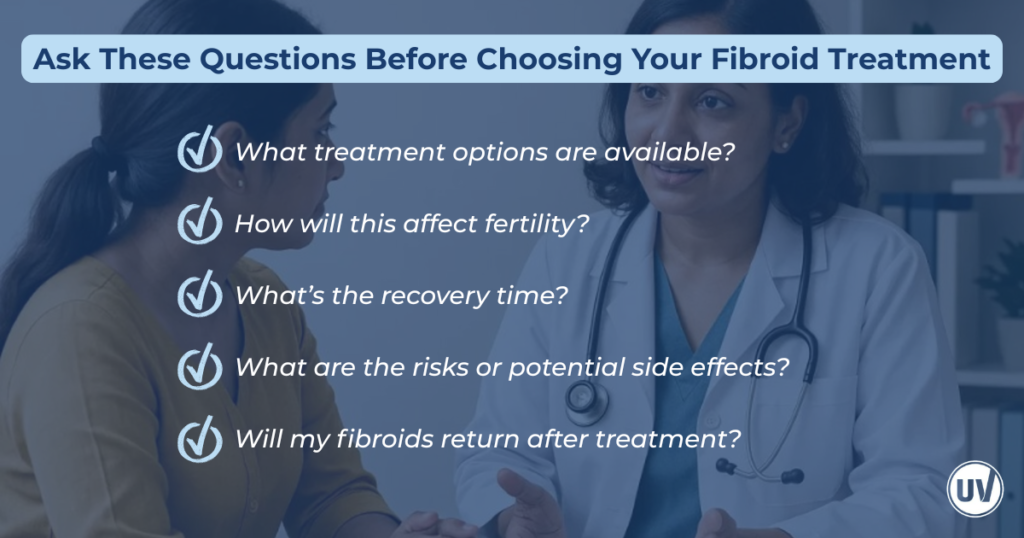
Prepare a list of questions like:
- Recovery Time: How long is the expected recovery?
- Procedure Risks: What are the specific risks involved?
- Recurrence Rates: How likely is fibroid recurrence?
These discussions ensure that you’re aware of the realities post-treatment. Staying informed about recovery protocols, potential risks, and recurrence chances empowers you to make a decision that fits your lifestyle and health needs.
Making Your Decision: Shared Decision-Making and Next Steps
Choosing a fibroid treatment is a significant decision. Engage in shared decision-making with your healthcare provider. This collaborative approach ensures your preferences and values are part of the treatment plan.
Discuss your concerns and ask detailed questions to clarify options. Understanding all aspects can empower you in your decision-making journey.
Key steps to take next include:
- Assessing Treatment Options: Review all available choices.
- Weighing Pros and Cons: Consider each option’s benefits and risks.
- Setting Clear Goals: Define what you hope to achieve with your treatment.
Taking these steps can help you make an informed decision that aligns with your health goals and lifestyle.
Frequently Asked Questions
Treatment can range from symptom management with medications, minimally invasive procedures like Uterine Fibroid Embolization (UFE), to surgical options such as myomectomy or hysterectomy. Your doctor can help determine which is best for your situation.
Factors such as fibroid size, location, symptoms, age, and future fertility goals all play a role. A specialist can review your options and create a personalized plan based on your health and lifestyle.
Yes. Procedures like UFE or MRI-guided focused ultrasound can reduce fibroid size and symptoms with shorter recovery times compared to traditional surgery. Discuss these options with your provider to see if they are suitable for you.
Take Charge of Your Fibroid Care
Choosing the right fibroid treatment doesn’t have to be confusing. By asking the right questions, understanding your symptoms, and exploring all available options, you can make a decision that fits your health goals and lifestyle.
At United Fibroid & Vascular Centers, our specialists provide personalized guidance, advanced treatment options, and compassionate support to help you find relief and improve your quality of life. Schedule a consultation today and take the first step toward a fibroid care plan tailored to you.